Introduction
Artificial Intelligence (AI) has evolved from a futuristic concept into a powerful technology that influences nearly every aspect of our daily lives. In 2026, AI is driving innovation across healthcare, education, finance, manufacturing, entertainment, and transportation. From intelligent chatbots and virtual assistants to self-driving vehicles and advanced medical diagnostics, AI is helping businesses improve efficiency while providing users with smarter, faster, and more personalized experiences.
As AI technology continues to advance, understanding its impact has become essential for businesses, professionals, and everyday consumers.
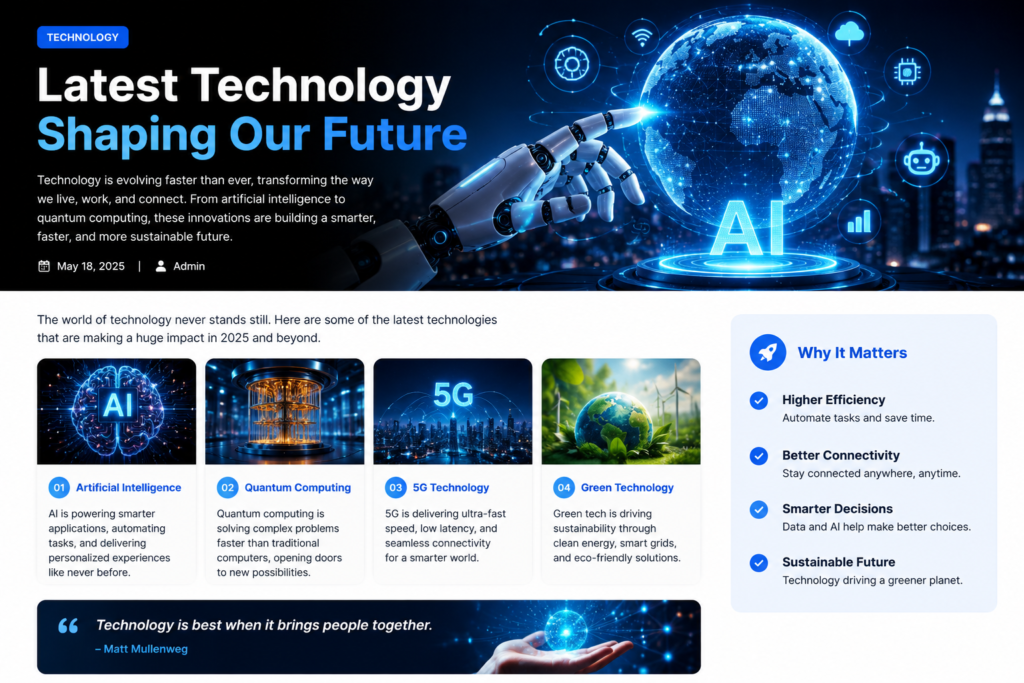
What Is Artificial Intelligence?
Artificial Intelligence is a branch of computer science that enables machines to simulate human intelligence. AI systems can analyze data, recognize patterns, make decisions, solve problems, and even generate text, images, videos, and software code.
Unlike traditional software that follows fixed rules, modern AI systems learn from large amounts of data and improve their performance over time.
Why AI Is the Biggest Technology Trend in 2026
Several factors have made AI the fastest-growing technology today:
- Powerful AI language models
- AI image and video generation
- AI-powered search engines
- Automated business operations
- Personalized customer experiences
- AI coding assistants
- Improved cybersecurity solutions
Businesses of every size are investing heavily in AI to reduce costs and increase productivity.
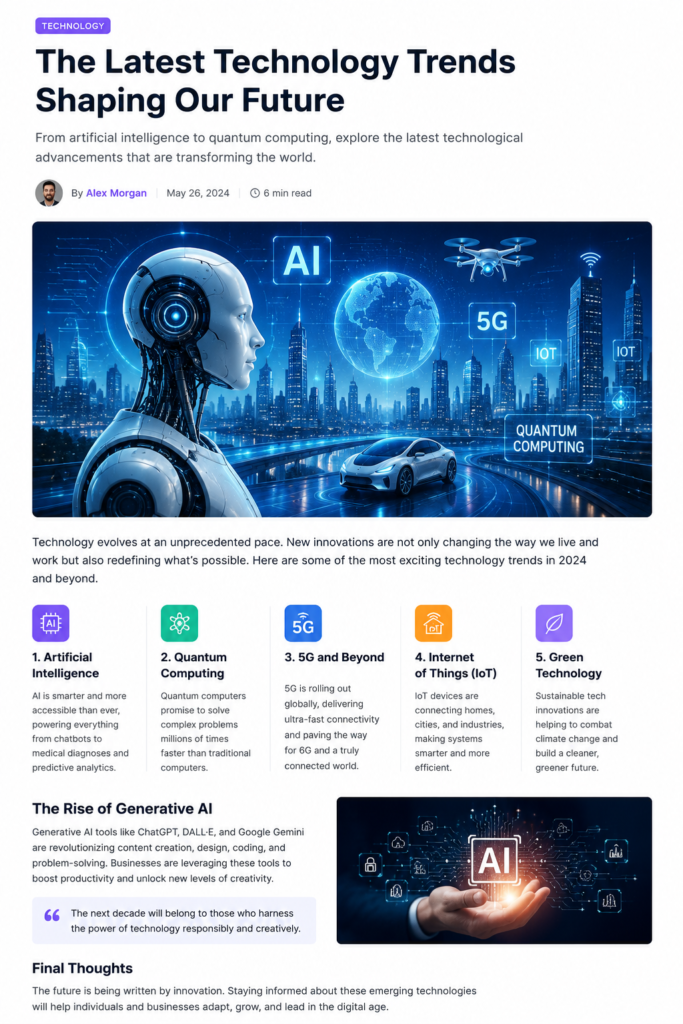
Top Applications of AI
1. Healthcare
AI helps doctors detect diseases earlier, analyze medical images, assist in surgeries, and accelerate drug discovery. Patients also benefit from AI-powered virtual health assistants and personalized treatment recommendations.
2. Education
Modern learning platforms use AI to create customized lessons based on each student’s progress. AI tutors provide instant explanations and help students learn more efficiently.
3. Finance
Banks use AI to detect fraud, automate customer support, assess credit risks, and provide intelligent investment recommendations.
4. Manufacturing
Smart factories use AI-powered robots and predictive maintenance systems to improve production efficiency while reducing downtime.
5. E-commerce
Online retailers use AI to recommend products, optimize pricing, improve inventory management, and deliver personalized shopping experiences.
Benefits of Artificial Intelligence
AI offers numerous advantages across industries, including:
- Increased productivity
- Faster decision-making
- Reduced operational costs
- Improved customer service
- Better data analysis
- Enhanced security
- Greater automation
- Personalized user experiences
These benefits enable organizations to remain competitive in an increasingly digital world.
Challenges of AI
Despite its advantages, AI also presents several challenges:
- Data privacy concerns
- Ethical decision-making
- Job displacement through automation
- AI bias in training data
- Cybersecurity risks
- Regulatory and legal issues
Governments and technology companies are working together to establish responsible AI practices and ensure safe deployment.
Emerging AI Trends in 2026
Several exciting developments are shaping the future of AI:
- AI-powered personal assistants capable of handling complex tasks
- Autonomous robots for logistics and manufacturing
- AI-generated videos and digital content
- Smarter cybersecurity systems
- AI-powered scientific research
- Voice-first computing
- AI integration with wearable devices
- Sustainable AI solutions that reduce energy consumption
These innovations are expected to redefine how people interact with technology over the coming years.
The Future of Artificial Intelligence
The future of AI looks exceptionally promising. As computing power increases and AI models become more efficient, businesses and individuals will gain access to even more intelligent tools. AI is expected to transform industries such as healthcare, transportation, agriculture, education, and environmental protection.
Rather than replacing humans entirely, AI will increasingly serve as a powerful assistant, helping people solve problems, make better decisions, and focus on more creative and strategic work.
Conclusion
Artificial Intelligence is no longer a technology of the future—it is a driving force behind today’s digital transformation. In 2026, AI continues to revolutionize industries by improving efficiency, enhancing customer experiences, and enabling groundbreaking innovations. While challenges such as privacy and ethics remain important, responsible AI development will help unlock its full potential. Organizations and individuals who embrace AI today will be better prepared for the rapidly evolving technological landscape of tomorrow.